Animals and hunting
Which animals live on which map, what skinning gives you and what it is good for, how wolves and bears behave, and how to trap and fish.
One deer gives you more food than a backpack full of cans, plus fat, bones and a pelt you can turn into gear. Some animals hunt back, though — wolves and bears are among the most dangerous things in DayZ.
Which animals live where
| Animal | Chernarus | Livonia | Sakhal | Nasdara |
|---|---|---|---|---|
| Wolf | yes | yes | yes | – |
| Brown bear | yes | yes | yes | – |
| Red deer, roe deer | yes | yes | – | – |
| Reindeer | – | – | yes | – |
| Wild boar | yes | yes | – | yes |
| Pig, cow | yes | yes | – | – |
| Sheep, goat | yes | yes | yes | yes |
| Mouflon, feral dogs, monitor lizard | – | – | – | yes |
| Hare, fox | yes | yes | yes | yes |
| Hen | yes | yes | – | yes |
- Herds of deer, reindeer, boar and farm animals move between fixed grazing areas, so where you saw a herd once, you'll find one again.
- On Chernarus, wolf packs live mostly in the forests of the west, the north and the north-east; bears keep to the far north and the western edge. Sakhal has the most bears of all maps.
- On Nasdara, packs of feral dogs take the wolves' place: their pack behaviour has the same hunting and circling phases.
How many animals a server spawns is a server setting; the server overview on the wiki's start page shows whether your server has more or fewer than vanilla.
Skinning and butchering
Crouch next to a dead large animal with a knife or another blade — hatchets, axes, a sickle, a screwdriver, a crowbar or most bayonets work too. Skinning takes about 10 seconds and wears your tool a little. Small animals (hare, fox, hen, lizard) become an item when they die: pick them up and cut them with a knife instead. Fish are gutted the same way.
Some things to know:
- Damaged meat stays in the body. Each body part gives its share of the meat only while it is undamaged — a shot through the chest or belly costs you steaks, a headshot ruins the headdress.
- A worn tool gives worn bones and a worn pelt.
- On Sakhal, carcasses freeze in the cold, and a frozen body can't be skinned. Skin your kill soon.
- Skinning makes your hands bloody, and everything you get carries salmonella until cooked. Wash your hands before you eat — see Diseases.
- A wounded animal never bleeds to death. If it runs off, you have to find it and finish it.
What each animal gives
Undamaged and skinned with a good tool:
| Animal | Meat | Pelt | Fat | Bones | Guts | Extra |
|---|---|---|---|---|---|---|
| Cow | 18 beef steaks | 1 | 3 | 4 | 5 | |
| Red deer | 18 venison steaks | 1 | 3 | 3 | 3 | |
| Reindeer | 18 reindeer steaks | 1 | 3 | 3 | 3 | |
| Brown bear | 16 bear steaks | 2 | 2 | 5 | 4 | Headdress |
| Pig | 14 pork steaks | 1 | 1 | 2 | 2 | |
| Wild boar | 13 pork steaks | 1 | 1 | 2 | 2 | |
| Sheep | 13 mutton steaks | 1 | 1 | 2 | 2 | |
| Roe deer | 10 venison steaks | 1 | 1 | 1 | 2 | |
| Wolf | 9 wolf steaks | 1 | 1 | 1 | 2 | Headdress |
| Goat | 9 chevon steaks | 1 | 1 | 1 | 2 | |
| Hare | 2–4 hare legs | 1 | – | a few | – | |
| Fox | 2–4 fox steaks | 1 | – | a few | – | |
| Hen | 2–4 chicken steaks | – | – | a few | – | feathers |
Bones come in stacks of several. A big cow or deer steak is a full meal; wolf, sheep and goat steaks are smaller.
What the parts are good for
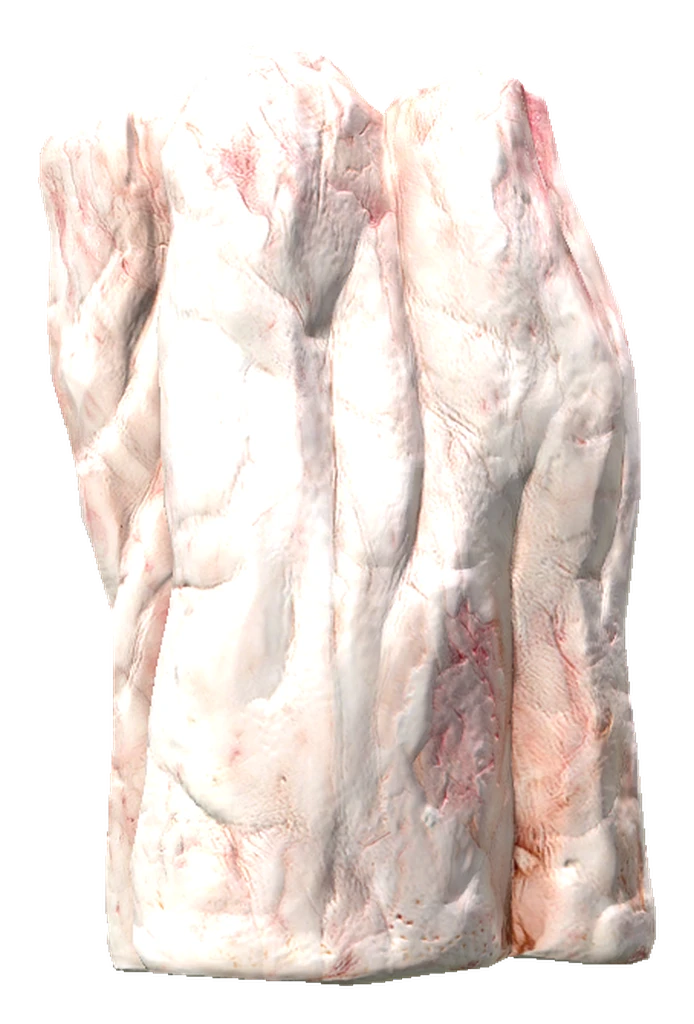 FatLard
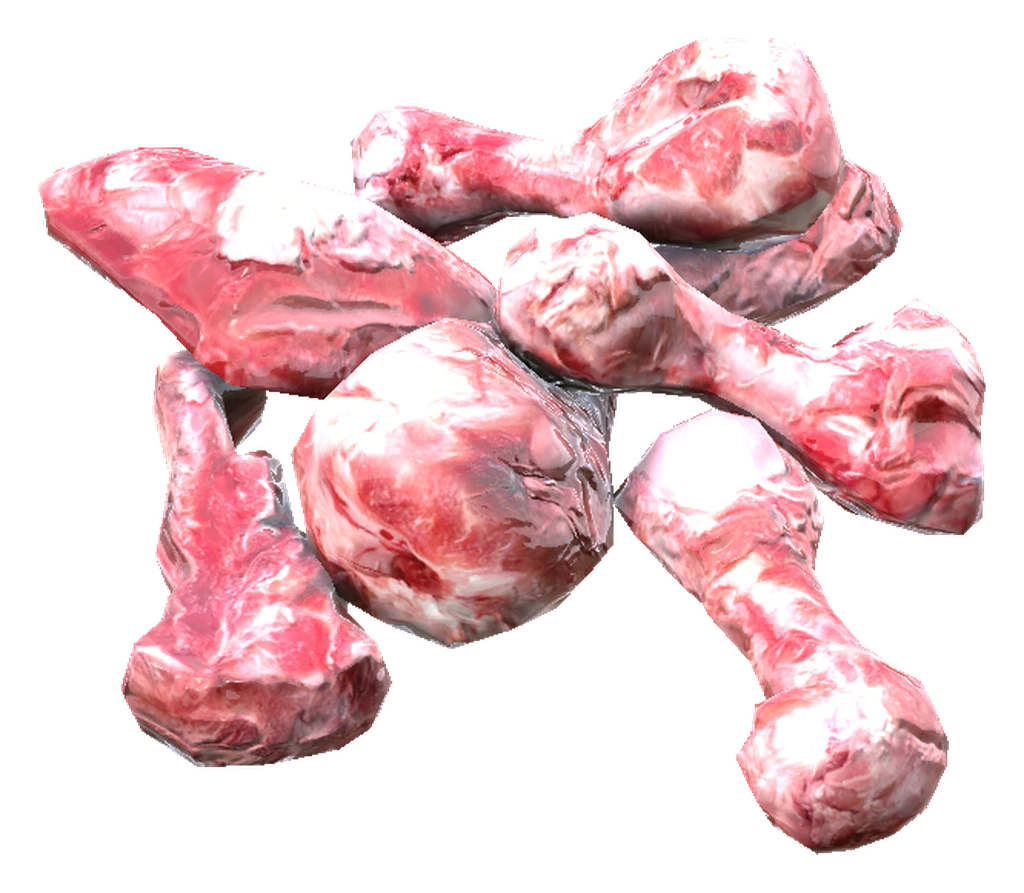 BonesBone
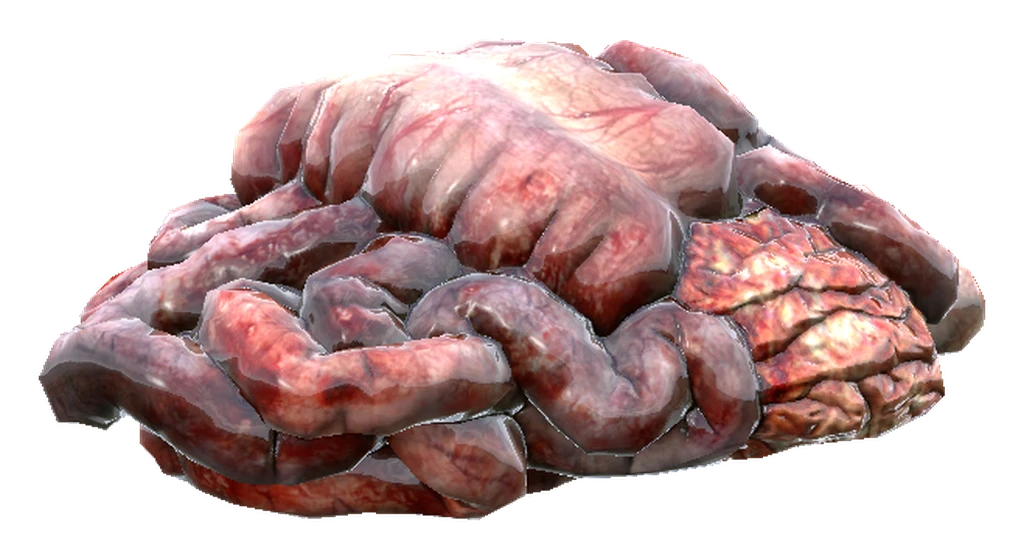 GutsGuts
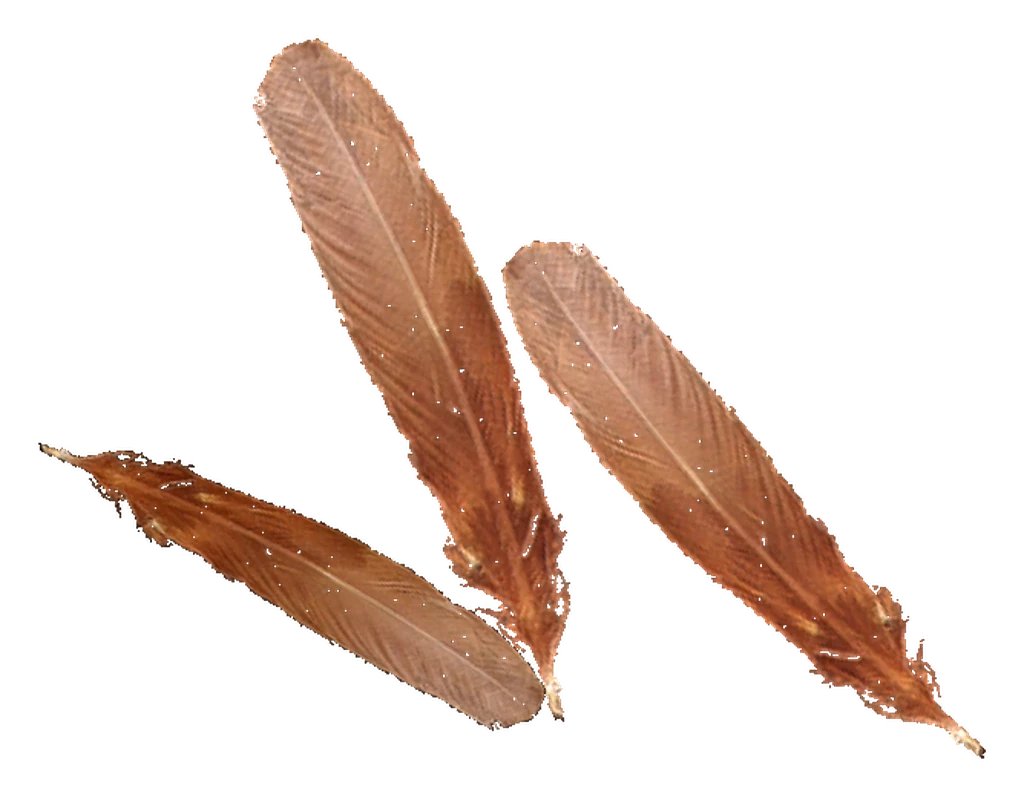 Chicken FeathersChickenFeather
- Meat: cook it before you eat it — see Fire and cooking. Wolf and bear meat often keep their salmonella even when cooked.
- Fat: put it in the pan with your meat and the fat is used up instead of the meat. A full piece of fat also adds about 15 minutes to a torch. You can eat it, but it is not fire fuel.
- Bones: a bone and a stone make a Bone Knife (or knap a bone against a rock). A bone and a blade make a Bone Fishing Hook for fishing. A bone knife on a long or sharpened stick makes an improvised spear.
- Guts: with a blade, a big enough portion of guts becomes a Rope. Guts are edible, and in a barrel of water together with plants they turn into garden lime.
- Feathers: fletch improvised crossbow bolts.
- Headdress: wolves and bears give a wearable headdress; a fox pelt and a leather sewing kit make one too.
Pelts and leather
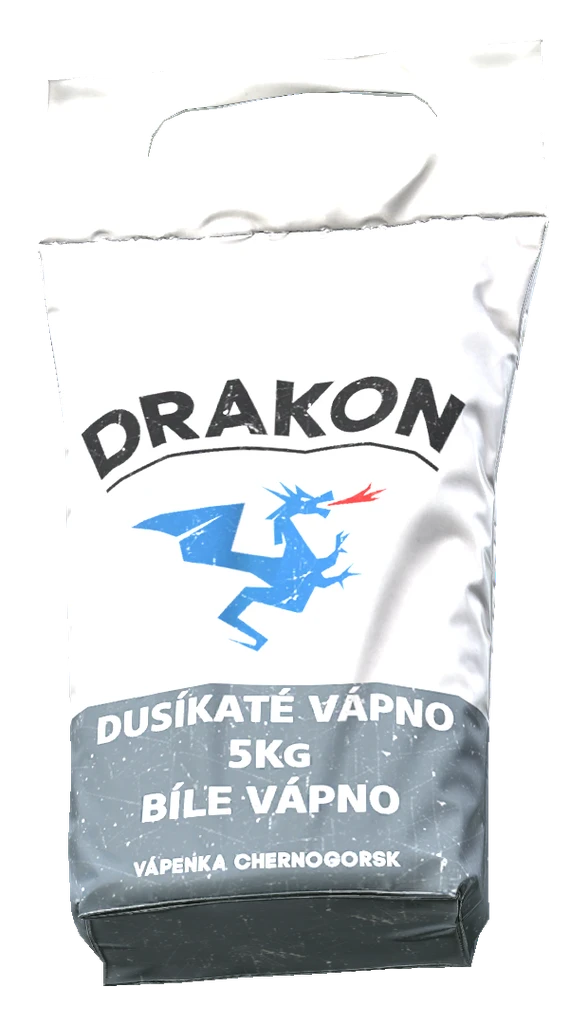 Garden LimeGardenLime
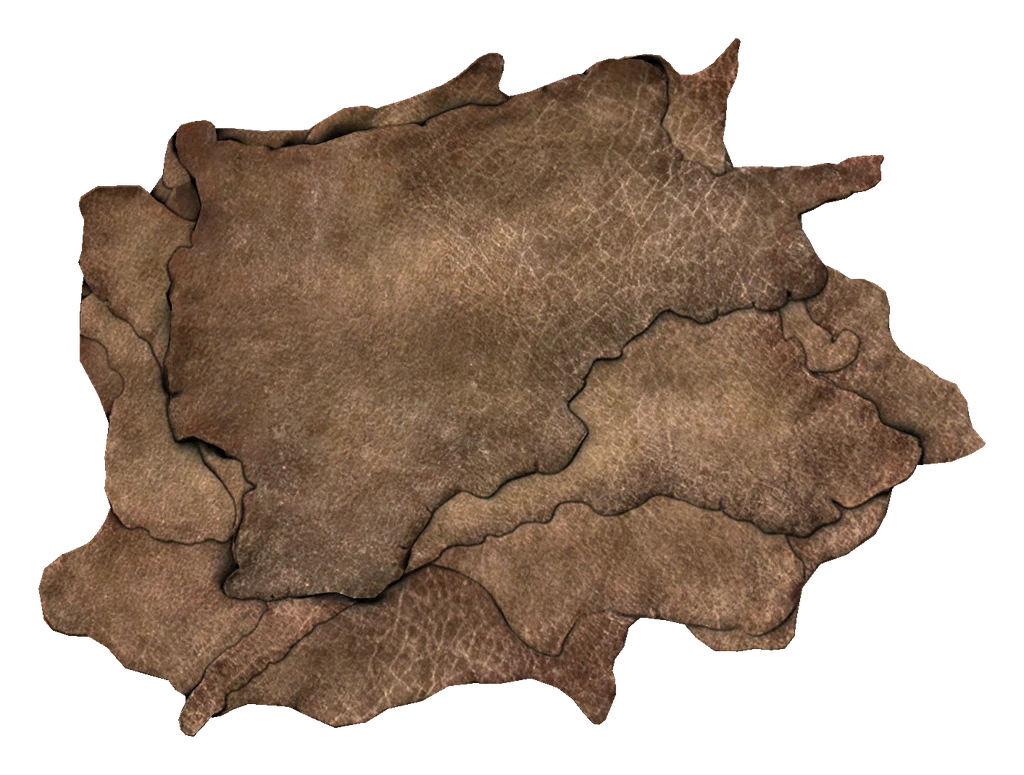 Tanned LeatherTannedLeather
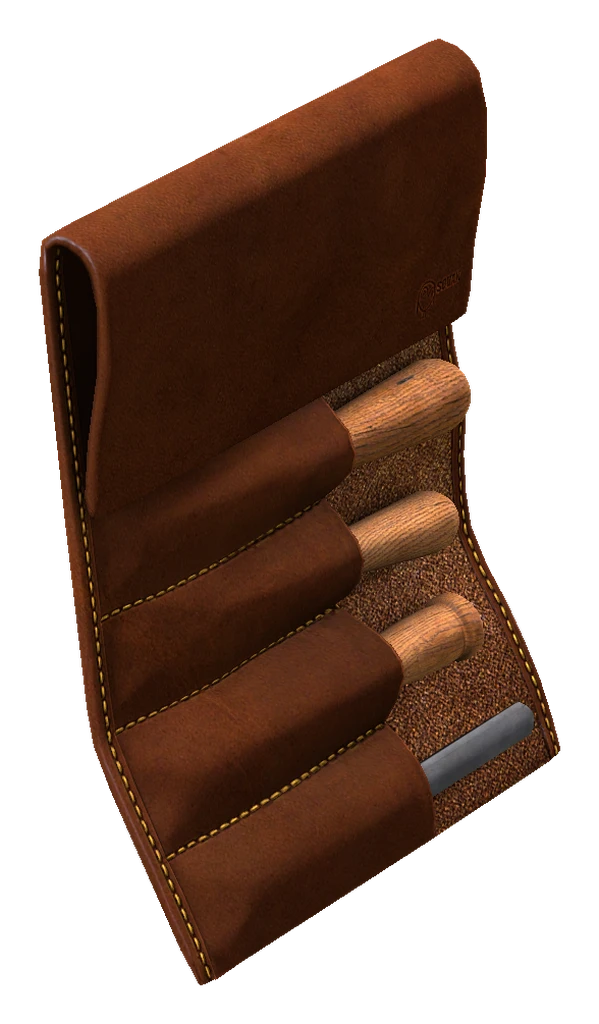 Leather Sewing KitLeatherSewingKit
Tan a pelt with garden lime and it becomes tanned leather. You can also put pelts into a barrel filled with water and lime. Bigger pelts give more leather:
| Pelt | Leather with garden lime |
|---|---|
| Bear | 12 |
| Cow | 8 |
| Deer, reindeer, mouflon, boar, pig, wolf, sheep, goat | 4 |
| Fox | 2 |
| Hare | 1 |
A worn pelt gives less. From two pieces of leather and a leather sewing kit you make a Leather Backpack or a Waterskin. A wild boar pelt with a rope becomes a Fur Courier Bag, and that with three sticks a Fur Backpack.
Wolves and bears
Wolves
Wolves come in packs of several animals — on Chernarus sometimes up to ten. They are the most watchful animals in the game: they see you from 100–200 metres in daylight and hear you from up to 100 metres. Night, rain and fog shorten how far they see; crouching or lying down makes you a smaller target.
A pack usually circles you before it attacks. Each bite does real damage, shocks you, and almost always makes you bleed through bare skin — clothing helps. Several wolves at once can take you down fast. Their packs move to their hunting grounds from mid-morning to afternoon and again in the evening.
Bears
A brown bear sees poorly — 20 to 60 metres — but hears well, and it notices gunshots from a long way off. Get within about 15–50 metres and it reacts at once; stay within about 30 metres for ten seconds or so and it gets annoyed. Any hit makes it furious.
A bear swipe hits harder than a wolf bite, and its strongest blow can knock you out on the spot. Bleeding is almost certain. With about four times a wolf's health, a bear takes a lot to bring down — keep your distance and back away if one starts watching you.
Traps
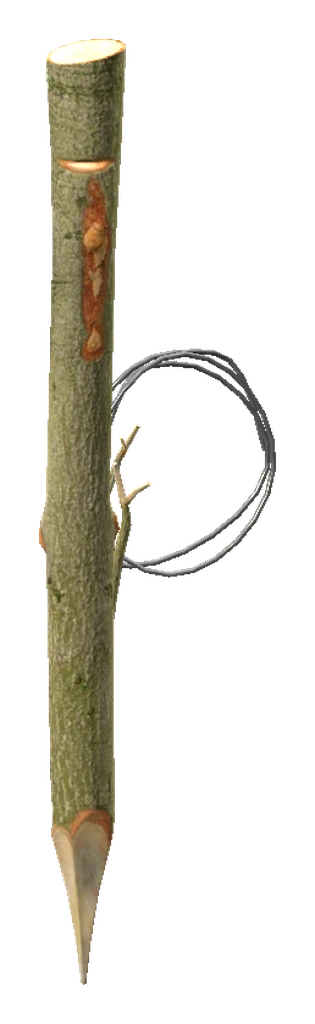 Snare TrapRabbitSnareTrap
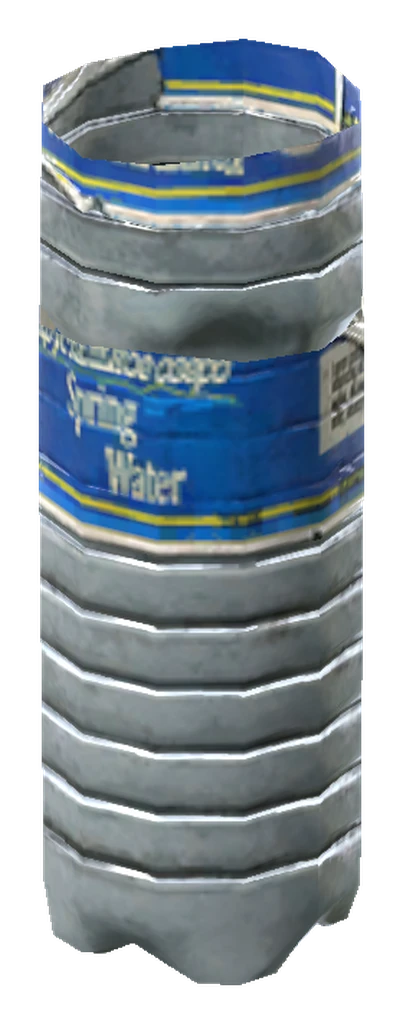 Small Fish TrapSmallFishTrap
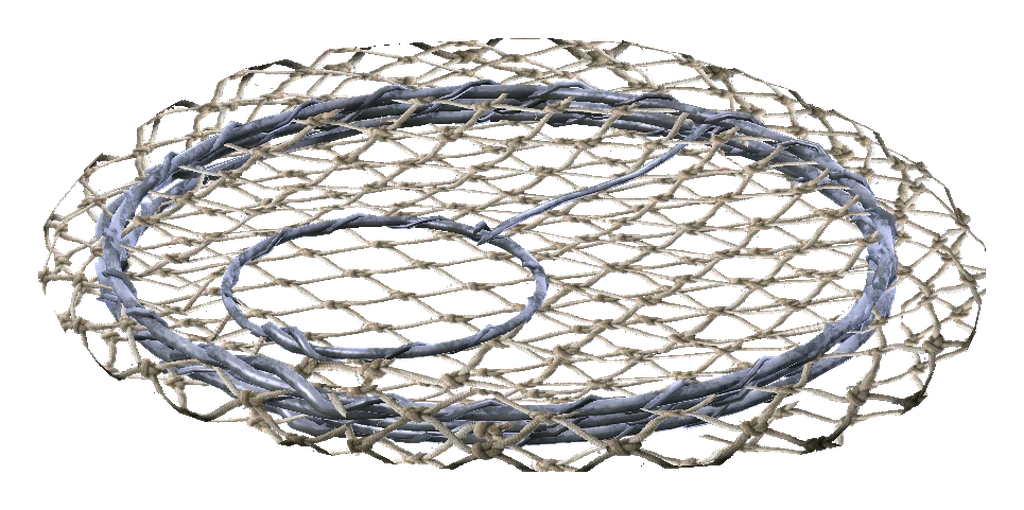 Fish Net TrapFishNetTrap
| Trap | How to make it | Where to set it | Bait | Catches |
|---|---|---|---|---|
| Snare trap | Short stick + metal wire | Soft ground you could dig in | Fruit or vegetables for hare and hen, worms for fox and hen, meat for fox | Hare, hen, fox; lizards on Nasdara |
| Small fish trap | Plastic bottle cut with a knife | In the sea or fresh water | Earthworm | Small fish |
| Fish net trap | Netting + metal wire | In the sea or fresh water | Earthworm | Large fish |
- A trap works for about 20 minutes after you set it. Unbaited, the chance it catches anything in that time is about 15 %; with good bait it is about 75 %.
- A catch only appears while nobody stands near the trap — early on, keep at least about 15 metres away; the distance shrinks over time.
- Touching the trap or its bait restarts the timer. A failed round eats part of the bait.
- Each trap lasts about 20 catches.
What the fish traps bring in:
| Map | Small trap at sea | Small trap in fresh water | Net at sea | Net in fresh water |
|---|---|---|---|---|
| Chernarus, Livonia | Sardines | Bitterlings | Mackerel | Carp |
| Sakhal | Shrimp | nothing | Walleye pollock, steelhead trout | nothing |
| Nasdara | nothing | small fish | nothing | Carp, catfish |
A bear trap is not for hunting: it hurts and cripples whatever steps into it, including you.
Fishing
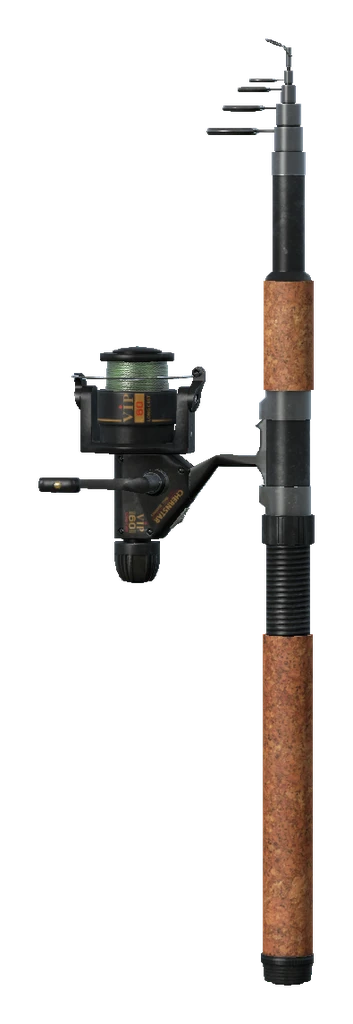 Fishing RodFishingRod
 Simple Fishing RodImprovisedFishingRod
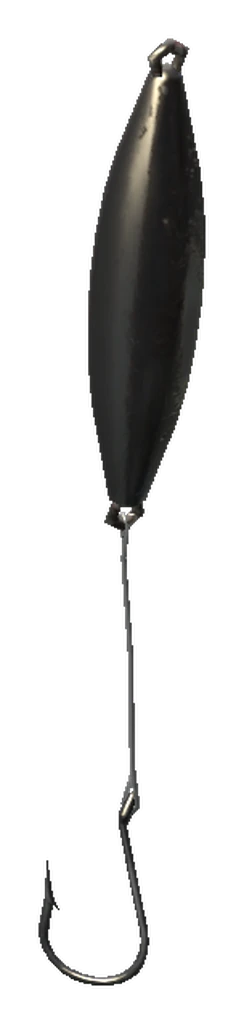 Fishing HookHook
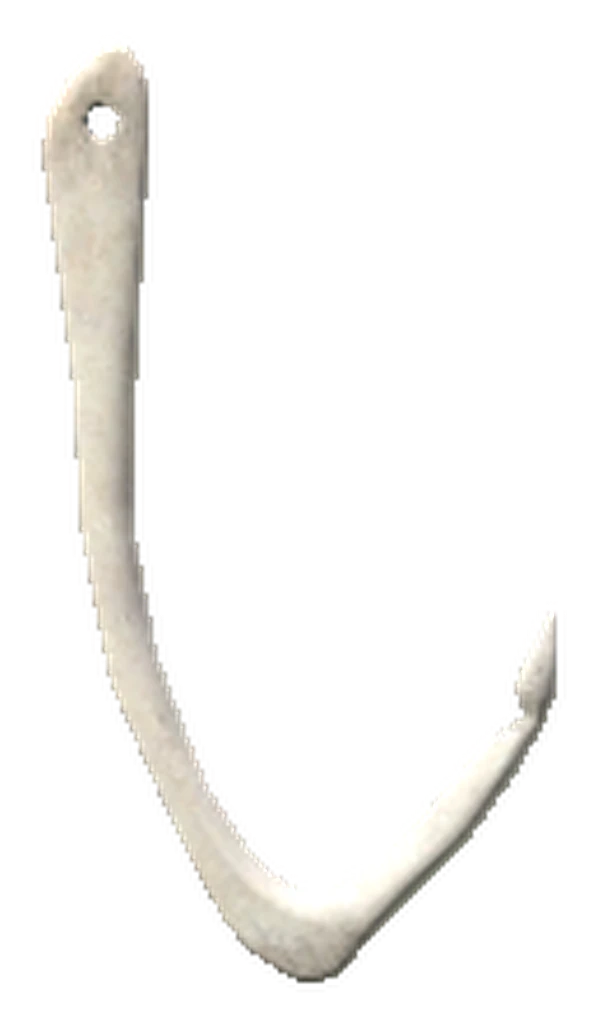 Bone Fishing HookBoneHook
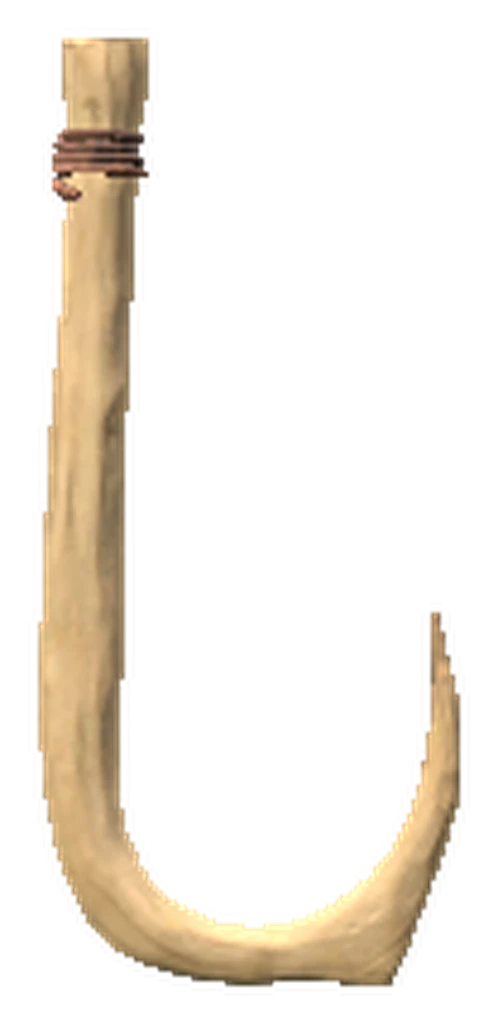 Wooden Fishing HookWoodenHook
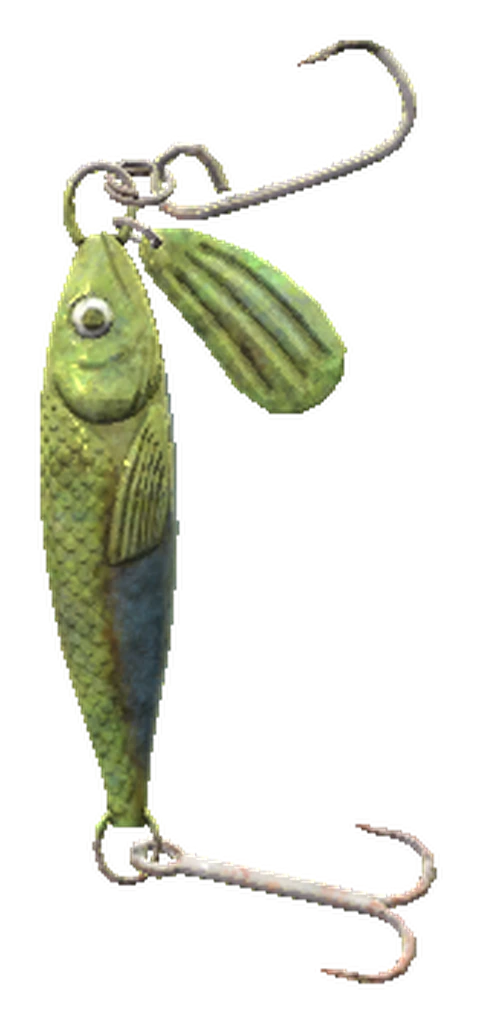 JigJig
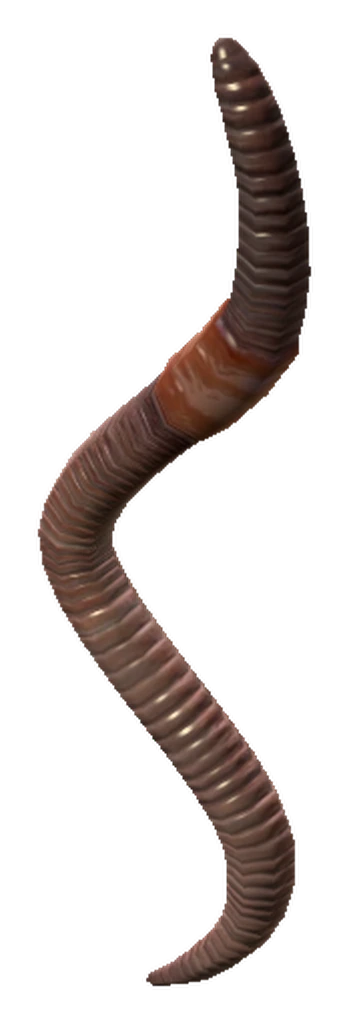 EarthwormWorm
You need a rod with a hook, and ideally an earthworm on the hook.
- Rod: a fishing rod from coastal loot, or a simple fishing rod made from a rope and a long or sharpened stick. On Nasdara rods and hooks don't spawn — craft them.
- Hook: a fishing hook, a jig, a bone hook (bone + blade) or a wooden hook (short stick + blade).
- Bait: an earthworm. Dig for worms on soft, fertile ground with a knife or a shovel; a shovel brings up three at a time. A jig works without bait.
Crouch at the shore and cast into the sea or fresh water within about 20 metres. Wells don't count.
| Map | Sea | Fresh water |
|---|---|---|
| Chernarus, Livonia | Mackerel | Carp |
| Sakhal | Walleye pollock, steelhead trout | only junk |
| Nasdara | only junk | Carp, catfish |
Now and then you pull up junk instead — old boots or a cooking pot.
| Setup | How fast fish bite | Fish size |
|---|---|---|
| Fishing rod + hook + worm | within a few tries, about 15–25 seconds | large |
| Fishing rod + jig | a bit slower | large |
| Fishing rod + hook, no worm | about two minutes | – |
| Simple rod + bone or wooden hook + worm | slower | about half |
- Carp and mackerel bite best at dawn and dusk; pollock and trout around midday. Weather makes no difference.
- Every catch, and every bite you let pass, uses up the worm. A missed pull doesn't.
- Hooks wear out: a wooden hook lasts about 3 bites, a bone hook about 7, a jig about 12, a metal hook about 20.