Temperature and clothing
Freezing and overheating, how clothing, wetness and damage change your warmth, how to dry off and warm up, and what Sakhal and Nasdara add.
Cold kills slowly but surely: it burns your energy, gives you a cold and finally eats your health. Heat drinks your water and leads to heat stroke. Both come down to the same thing — the air around you against the warmth your clothes keep in — and wet clothes are the most common reason a comfortable day turns deadly.
How warmth works
The game compares the air around you with a comfortable 24 °C. Every few degrees colder pushes you towards cold, every few degrees warmer towards hot. Your clothing pushes back towards warm, moving adds a little heat, and a fire, a heat pack or a hot drink add more. The result is shown by the temperature icon, and it changes gradually — after you step outside it takes about a minute to settle.
For a feeling of scale (standing still, dry clothes):
- Naked you are comfortable between about 18 and 30 °C, start getting cold below 18 °C and are in serious trouble below 6 °C.
- A complete outfit of the warmest items cancels about 20 °C of cold: you stay comfortable down to around freezing — but you start overheating above about 10 °C.
- Jogging adds about 2 °C, sprinting about 3 °C.
So in summer, too many warm clothes overheat you, and in winter even the best outfit needs a fire now and then.
The temperature icon
Behind the icon sits a hidden value, your heat comfort: 0 is comfortable, −1 is as cold and +1 as hot as it gets.
| Icon | Heat comfort | What happens |
|---|---|---|
| White | −0.15 to 0.15 | Comfortable. |
| Light blue | below −0.15 | You burn 0.2 extra energy per second, rising to 0.45 as it gets colder — about as much as jogging non-stop — and sooner or later catch a cold. |
| Dark blue | below −0.45 | 0.45 extra energy per second, a cold comes faster, and you lose health: 0.035 per second at first, about as much as you heal with full blood, rising to 0.3 per second at the coldest. |
| Flashing blue | below −0.75 | You freeze to death: from full health in about 20 minutes when it starts flashing, in about 6 minutes at the extreme. |
| Yellow | above 0.15 | You lose 0.08 to 0.18 extra water per second. If your water is below about 70 %, heat stroke slowly builds up — and gets serious once your water icon turns yellow. |
| Red, flashing red | above 0.45, flashing above 0.75 | More water loss, and heat stroke builds up even with full water — faster when it flashes. |
Heat itself never costs you health — only heat stroke does, once it is far along.
The arrows show where you are heading: arrows up mean you are warming, arrows down that you are cooling, three arrows that it is happening fast. If the icon is light blue with arrows up, your fire or clothing is winning.
Shivering is not a disease, it means you are cold. A Medical Thermometer does not measure how cold or hot you are either: it reads 36 to 36.5 °C, and 38.5 to 39 °C only when you have a fever. What a cold, flu and heat stroke do to you is in Diseases.
Clothing and insulation
Every clothing item has an insulation value from 0 to 1 (shown in the item list), and each body slot counts for a different share of your warmth:
| Slot | Share of your clothing warmth |
|---|---|
| Jacket or top | 24 % |
| Pants | 24 % |
| Shoes | 12 % |
| Hat or helmet | 10 % |
| Mask | 10 % |
| Vest | 8 % |
| Gloves | 8 % |
| Backpack | 6 % |
A warm jacket and warm pants do almost as much as everything else together. A hat, a mask and good shoes are the next best step.
Damage and wetness
What an item actually gives you depends on its condition and how wet it is:
| Wetness | Insulation kept |
|---|---|
| Dry | 100 % |
| Damp | 90 % |
| Wet | 50 % |
| Soaking wet | 10 % |
| Drenched | below zero — it chills you |
| Condition | Insulation kept |
|---|---|
| Pristine | 100 % |
| Worn | 90 % |
| Damaged | 80 % |
| Badly damaged | 50 % |
| Ruined | none |
A drenched down jacket is worse than no jacket at all.
Waterproof clothing
Some items can only get so wet. The item list shows this as maximum wetness: items with about 0.25 never get wetter than damp and keep 90 % of their insulation in any rain; items with 0.49 stop at wet, 0.79 at soaking wet, and items with 1 can get drenched. Items that never get soaking wet also keep the things in their pockets dry.
| Slot | Warm and waterproof (insulation 1, never more than damp) | Warm but soaks through |
|---|---|---|
| Jacket | Leather Jacket, Firefighter Jacket | Down Jacket, Pea Coat, Sweater |
| Pants | Leather Pants, Firefighter Pants | Cargo Pants |
| Shoes | Military Winter Boots | Fur Boots (stop at soaking wet) |
| Gloves | Ski Gloves, Leather Gloves | Wool Gloves |
| Hat | Headdress | Ushanka, Sherpa Hat |
| Mask | — | Ski Mask |
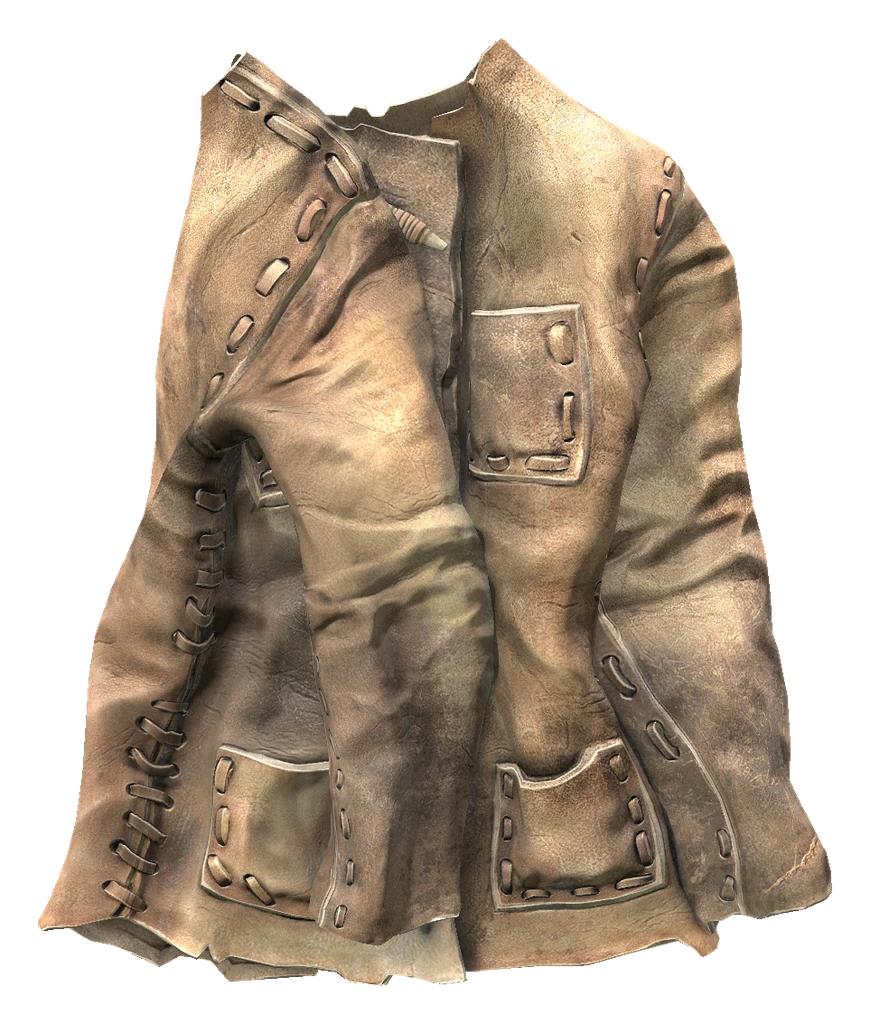 Leather JacketLeatherJacket_Beige
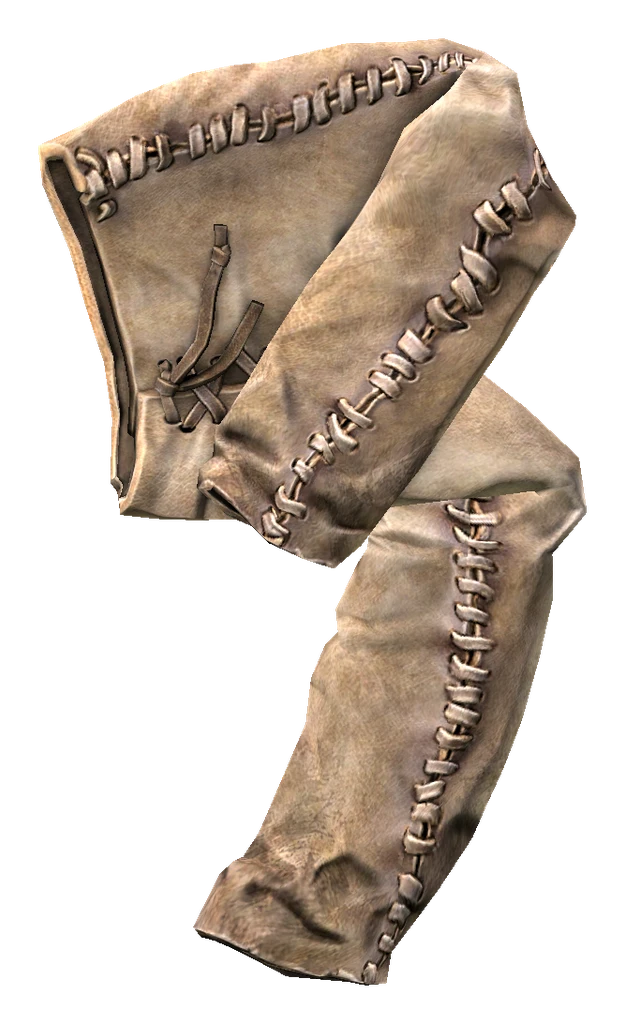 Leather PantsLeatherPants_Beige
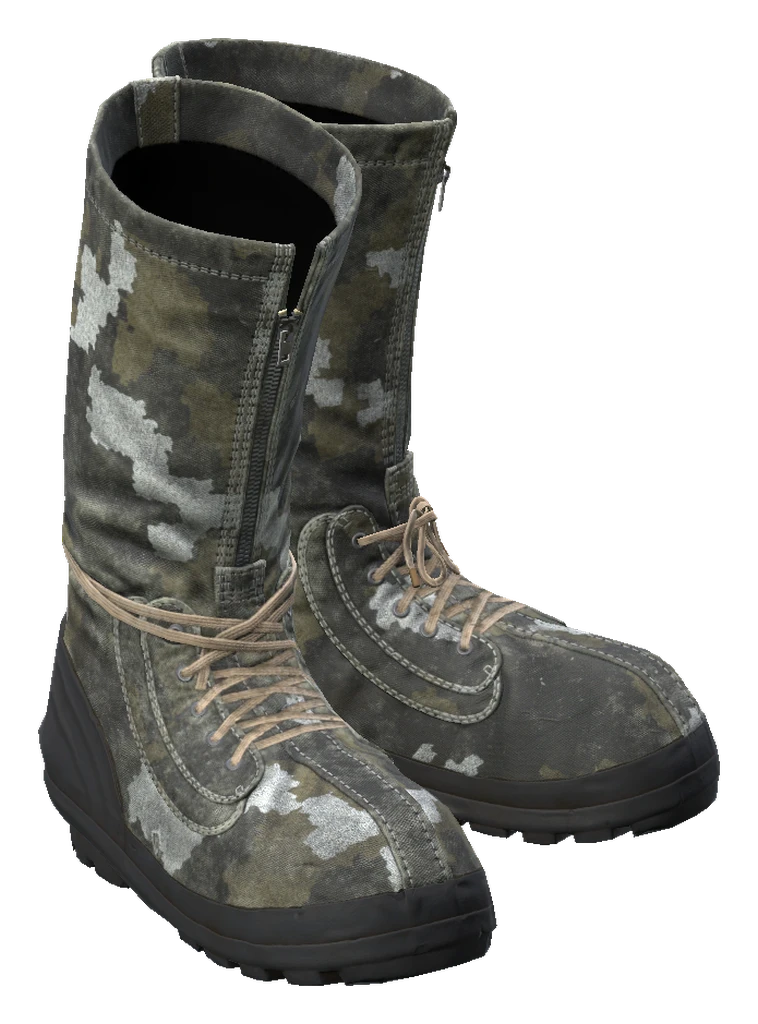 Military Winter BootsColdOperationBoots_Camo
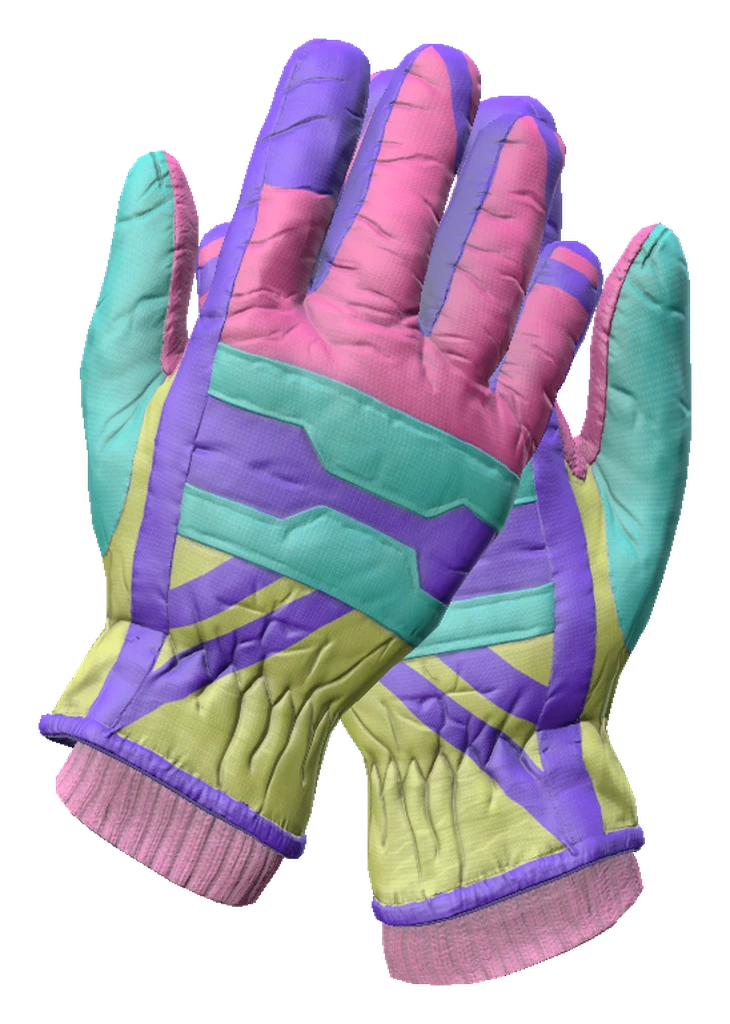 Ski GlovesSkiGloves_90s
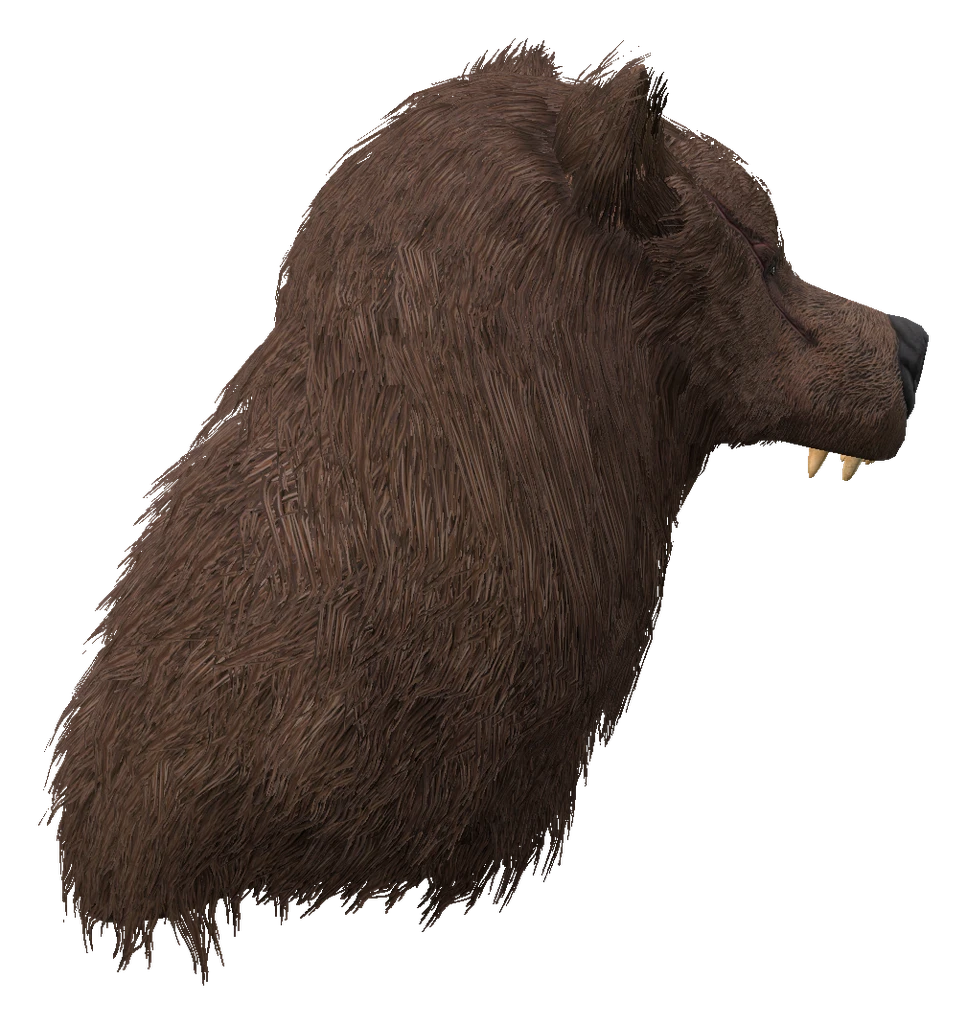 HeaddressHeaddress_Bear
Middle ground: the Bushlat Jacket, Hunter Boots and Padded Gloves are fully warm and stop at wet, Hunter Pants nearly so; the Military Winter Coat and Mountain Backpack stop at soaking wet. A Raincoat or a Patrol Jacket keeps itself dry but is not very warm. Browse everything in the clothing list.
Getting wet and drying off
- Rain soaks everything you wear unless you are inside a building, under a roof or in a car. A heavy downpour takes dry clothes to drenched in about 4 minutes, light rain in about 20; wind makes it faster.
- Snow only soaks you in a heavy, windy snowstorm, and far more slowly than rain.
- Wading soaks what is under water — shoes and pants first. Swimming soaks nearly everything at once.
- Bare skin in rain or snow costs extra warmth on top of that.
- Wet clothes are heavier: wet ones weigh a third more, drenched ones twice as much (vanilla; servers can change this).
Clothes dry by themselves as soon as no rain falls on you. On a mild day of about 20 °C that takes up to an hour, near freezing several hours. Stand within a metre or two of a fire and it takes minutes. Wringing out a soaked fabric garment drops it one wetness step at a time, down to damp.
Warming up
Fire
Within about 2 metres of a burning fire you get its full warmth; it fades out by about 4 metres. Close to a fire the air around you counts as about 20 °C (a little less on Sakhal and Nasdara), however cold it is — so with decent clothes you warm up quickly. How to build and keep one going is in Fire and cooking.
The heat buffer
Warming up at a fire while you are not cold fills a heat buffer, shown by its own icon. Once you walk away, it keeps the cold away completely until it runs out. The better you are dressed, the bigger it gets and the slower it drains: well dressed, a good warm-up lasts up to about an hour; naked, only a few minutes. Getting into water drains it many times faster.
Other heat sources
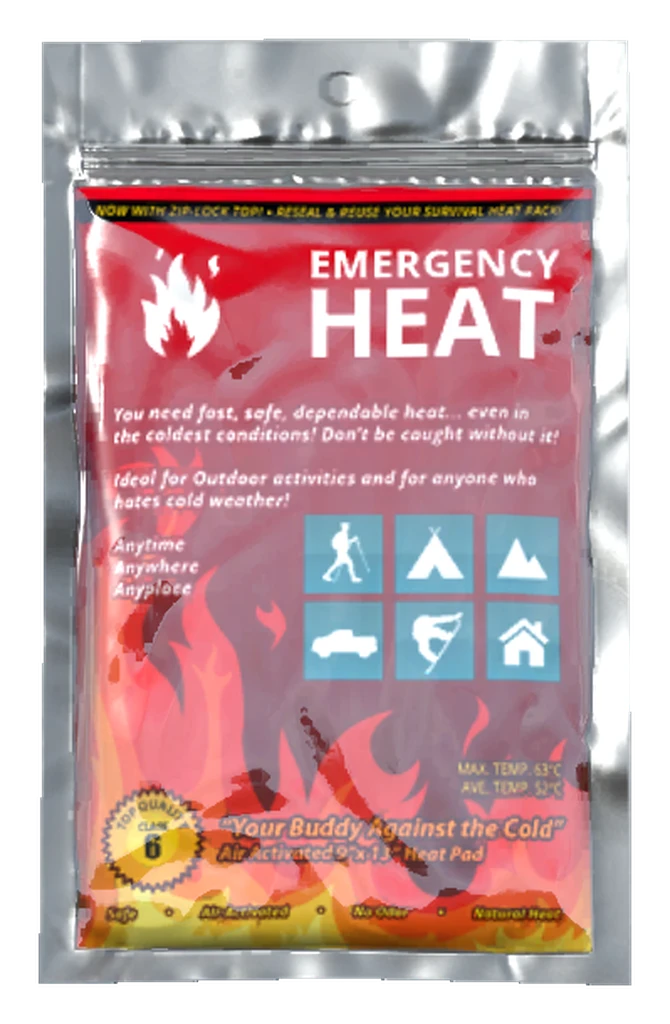 Heat PackHeatpack
- A heat pack, once activated, stays hot for about 20 minutes and is then used up. Carry it in a pocket of your clothes or backpack — it warms you about as much as 6 °C warmer air. In your hands it does nothing.
- Any hot item in your pockets warms you while it stays hot — a canteen of freshly boiled water a few degrees' worth.
- A hot meal or drink warms you slightly; ice-cold water or snow cools you slightly.
- Buildings keep off rain and wind and are about 1 °C warmer than outside.
- A car with the engine running keeps you comfortable. On a motorbike or in a boat the wind cools you the faster you go.
What makes it colder
- Night: the temperature follows a daily low and high that change with the month.
- Altitude: about 1 to 2 °C colder per 100 metres up, depending on the map.
- Fog takes off up to 2 °C and strong wind a few degrees more in the open. Clouds shift the temperature by a few degrees too — on Livonia they make it colder, on the other maps slightly warmer.
- Water: in a lake or river the cold water counts, not the air. On Chernarus that is like standing in −5 °C air.
Vanilla daily low to high by month:
| Map | January | April | July | October |
|---|---|---|---|---|
| Chernarus | −3 to 3 °C | 4 to 14 °C | 18 to 26 °C | 11 to 14 °C |
| Livonia | −7 to −2.5 °C | 1.5 to 9 °C | 20 to 25 °C | 5 to 10.5 °C |
| Sakhal | −6.5 to −3 °C | −9.5 to −5 °C | 9 to 16 °C | 1 to 8 °C |
| Nasdara | 3.4 to 17.4 °C | 8.4 to 25.4 °C | 14.4 to 38.4 °C | 8.4 to 28.4 °C |
Servers can change these values, the in-game date and the time — the server overview shows the server's own settings.
Sakhal
- Below freezing for most of the year. Plan clothing for cold first and carry a heat pack.
- Water is about 2 °C: falling into the sea or a lake is deadly within minutes.
- Buildings are about 1 °C colder than outside — they only shield you from wind and snow.
- Fires warm a little less than on other maps (about 17 °C instead of 20 °C).
- Heavy snowstorms with strong wind soak your clothes slowly.
- Hot springs warm you up fast while you stand in them, but you come out wet — dry off at a fire afterwards.
- Natural water and snow carry heavy metals (see Food and water).
Nasdara
- Hot days: in vanilla summer up to about 38 °C, while nights stay mild. Dress light during the day and keep your water above about 70 % to avoid heat stroke.
- Direct sun heats you up by as much as 8 °C around midday and less in the morning and afternoon; shade and buildings avoid it. Heavy clouds weaken the sun.
- Buildings are about 3 °C warmer than outside — the point of going inside is the shade.
- Water is about 20 °C, so swimming only cools you mildly — a quick way to cool down.
- Washing your head with water cools you and stops heat stroke from building for about half a minute. Wetting your clothes on purpose lowers their insulation and helps you cool down as well.
- Fires warm a little less (about 18 °C).
- Sandstorms don't change your temperature, but they hurt your lungs and eyes. A dust mask or gas mask protects your lungs, goggles your eyes (see Diseases).
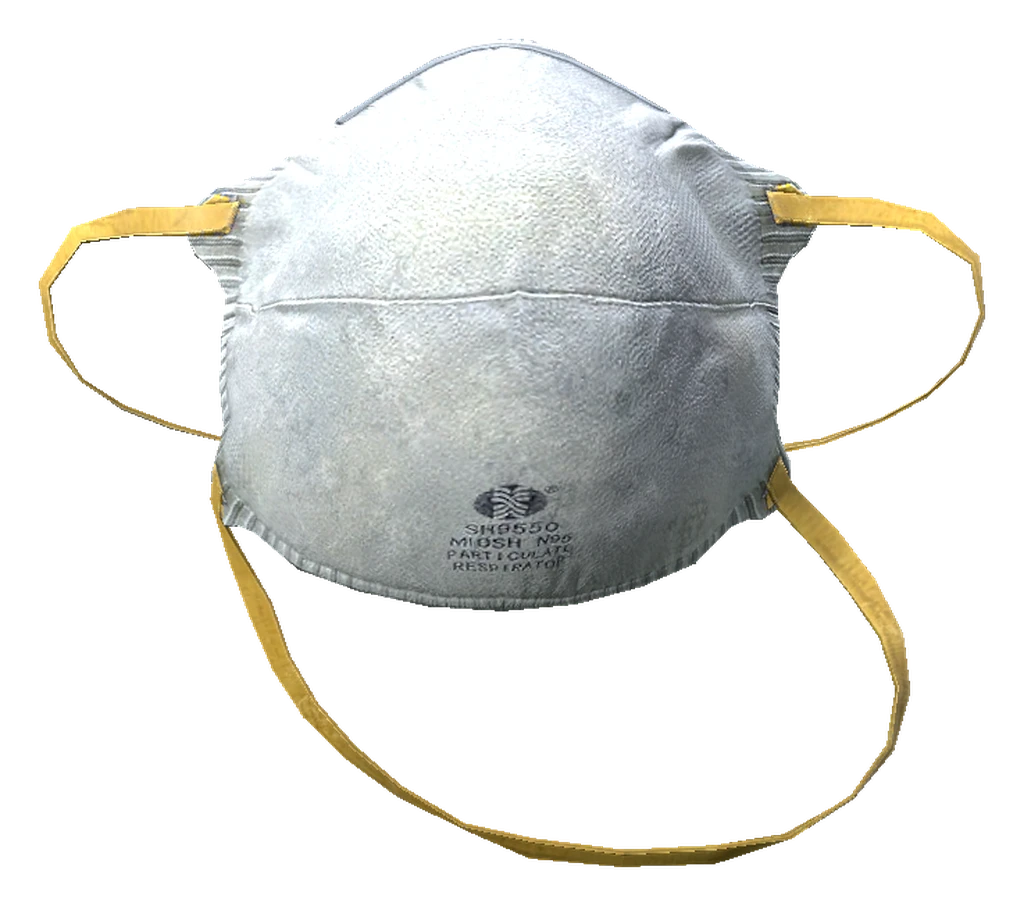 Dust MaskNioshFaceMask
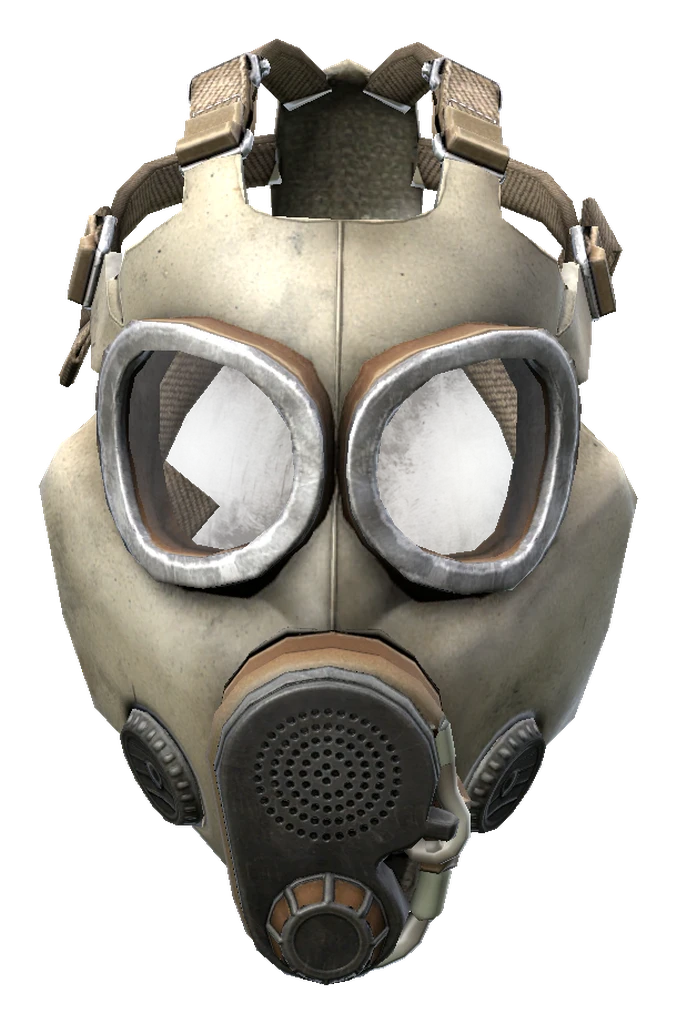 Combat Gas MaskGasMask
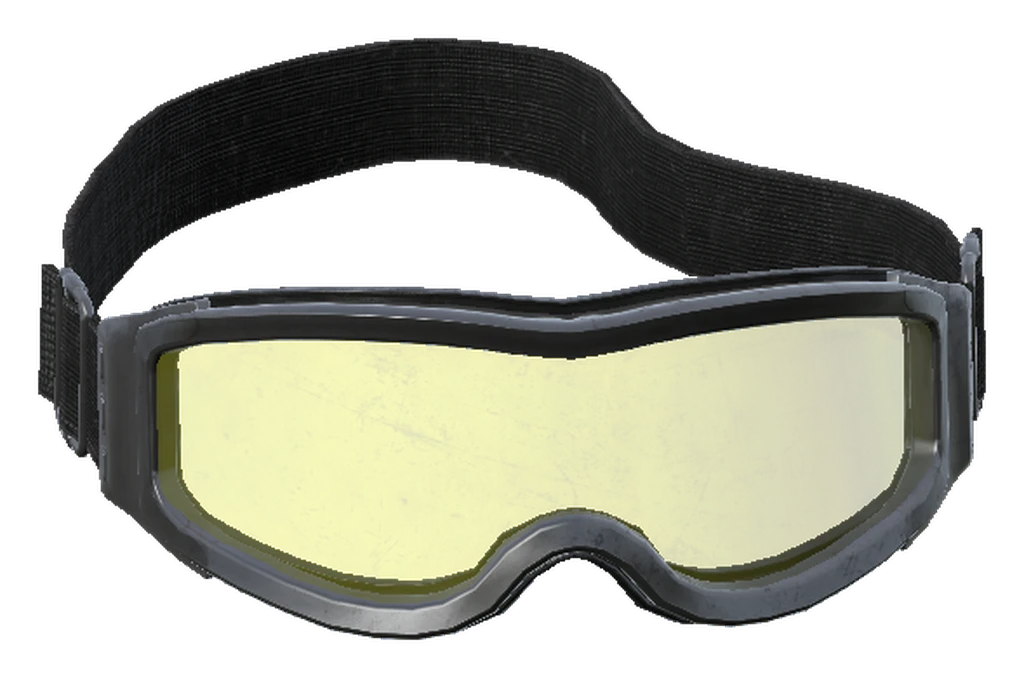 Ski GogglesSkiGoggles_BlackYellow
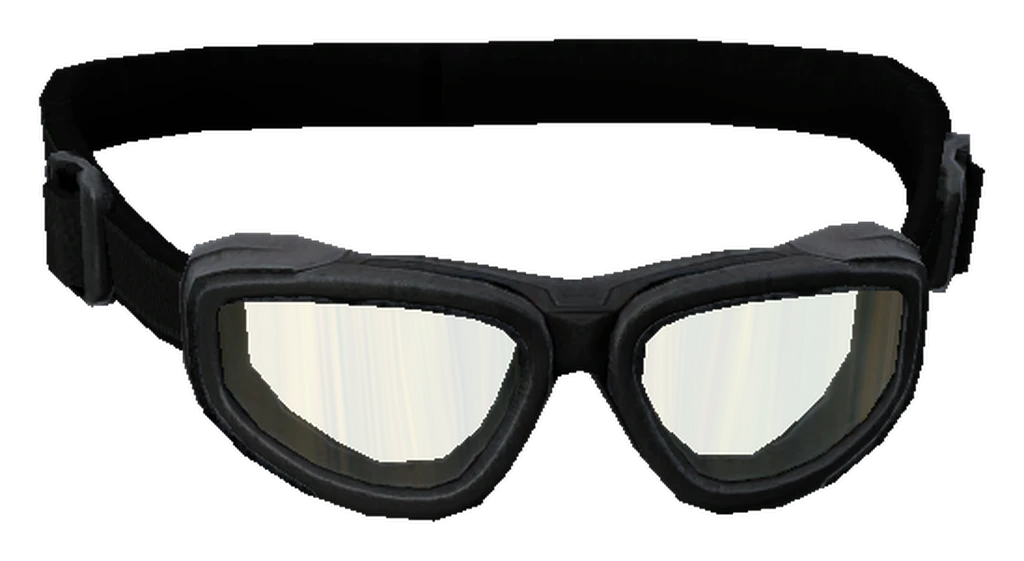 Tactical GogglesTacticalGoggles